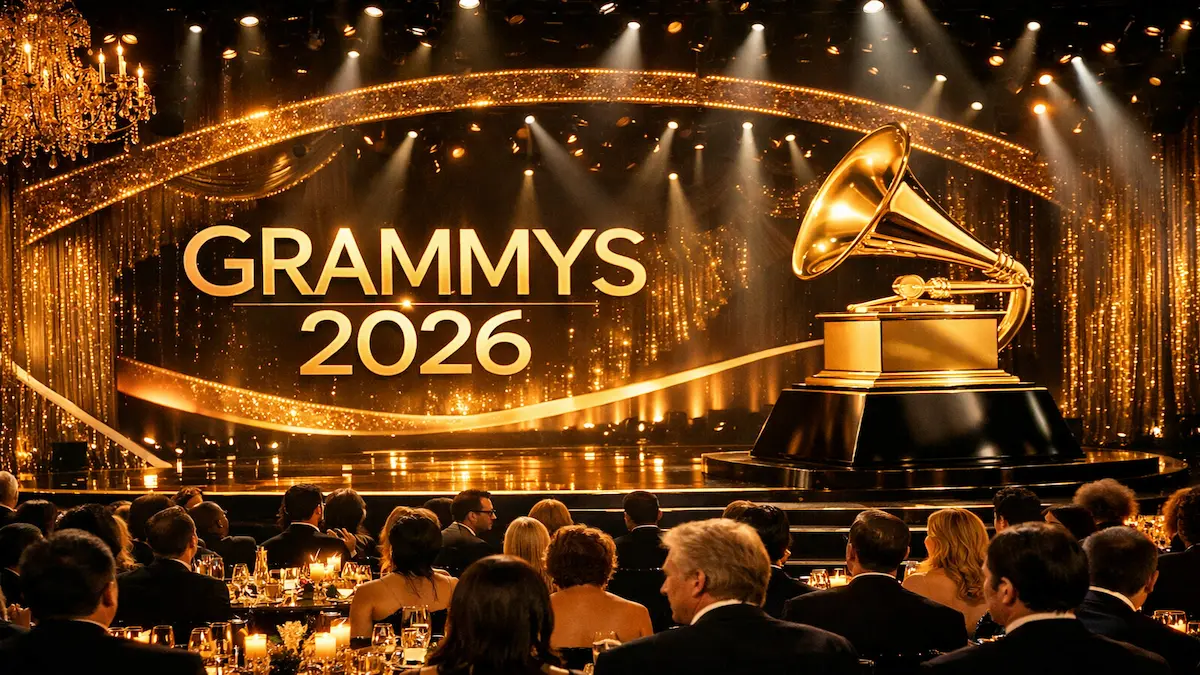
Grammys return on Feb. 1, 2026, marking the 68th annual celebration of musical excellence by the Recording Academy. Broadcasting live from Los Angeles, the ceremony once again brings together the industry’s most influential artists, producers, and songwriters—honoring a year defined by genre-blending releases, global reach, and cultural impact.
As anticipation builds, media consensus is already forming around key frontrunners, while the broader conversation highlights how the Grammys continue to evolve in a rapidly changing music landscape.
What the Grammys Represent Today
Since their debut in 1959, the Grammys have aimed to recognize artistic achievement rather than commercial success alone. Over time, the awards have grown into a cultural institution—one that both reflects and shapes the music industry.
In recent years, the Recording Academy has introduced structural changes to broaden representation and modernize its voting body. These reforms, as reported by The Hollywood Reporter, were designed to better reflect contemporary music across genres, generations, and global markets.
While debates about relevance persist, the Grammys remain the most influential peer-voted honor in music, capable of elevating careers and cementing legacies.
The Leading Favorites Heading Into Feb. 1
This year’s Grammy race features a competitive field of established icons and boundary-pushing artists. Several names have emerged as clear favorites across major categories based on nominations, critical reception, and industry momentum.
Kendrick Lamar enters the night as one of the most dominant nominees, leading the field with multiple nods across top categories. His continued recognition underscores the Academy’s long-standing respect for lyrical depth and cultural commentary.
Lady Gaga is also widely considered a frontrunner. Known for balancing commercial appeal with artistic reinvention, her presence across key categories reinforces her status as a consistent Grammy contender.
Bad Bunny’s latest project has positioned him at the center of historic conversations. Spanish-language releases gaining traction in general field categories reflect the Grammys’ expanding global perspective, according to coverage cited by Variety.
Sabrina Carpenter has emerged as a strong contender following a breakout year marked by commercial success and growing critical recognition, placing her firmly in several high-profile races.
Predictions in the Major Categories
While Grammy outcomes are never guaranteed, industry analysts and entertainment editors have identified likely winners based on voting patterns and past trends.
Album of the Year
Media consensus points to a close race between Kendrick Lamar, Lady Gaga, and Bad Bunny. Observers note that albums combining cultural impact with cohesive storytelling often resonate most with voters, according to Variety’s awards analysis.
Record and Song of the Year
Pop-driven tracks with broad radio and streaming reach are expected to dominate these categories, with Gaga and Carpenter frequently cited among the strongest contenders. Collaborative works that cross genre lines are also gaining traction.
Best New Artist
This category remains one of the most unpredictable. Several emerging performers are seen as potential winners, reflecting the Academy’s increasing openness to diverse sounds and backgrounds, according to PEOPLE’s awards coverage.
A Brief Look at Grammy History
The Grammys have long served as a mirror of musical change. From early jazz and classical roots to rock, hip-hop, and global pop, each era has reshaped the awards’ identity.
Historic milestones—from Michael Jackson’s record-setting wins to Beyoncé becoming the most awarded artist in Grammy history—illustrate how the ceremony often captures defining moments in music history.
At the same time, the Grammys have faced criticism over genre boundaries and inclusivity. The Academy’s recent adjustments signal an effort to balance tradition with relevance in the streaming age.
Performances and Moments to Watch
Beyond the awards themselves, Grammy night is known for high-impact performances and tribute segments that often become cultural touchstones.
This year’s ceremony is expected to spotlight both chart-topping stars and rising talent, reinforcing the Grammys’ dual role as a celebration of legacy and a launchpad for the future.
Industry insiders told The Hollywood Reporter that performance curation has become increasingly strategic, aiming to reflect both cultural relevance and artistic credibility.
Why the 2026 Grammys Feel Different
The 2026 Grammys arrive at a moment when music consumption is more global and fragmented than ever. Genre lines continue to blur, and international artists now compete on equal footing with U.S. chart leaders.
According to PEOPLE, this year’s nominations reflect a broader shift toward recognizing music that resonates across cultures, platforms, and audiences—rather than fitting neatly into traditional categories.
As a result, the Feb. 1 ceremony is poised to highlight not just who wins, but what kind of music defines the current era.
Where to Watch the 2026 Grammys
The 68th Annual Grammys will air live on CBS and stream on Paramount+, with Trevor Noah returning as host. Viewers can catch all performances, award presentations, and special tributes as the music industry celebrates the year’s biggest achievements.
Stay updated
Stay inspired with Stories, Style, and What We Love – explore more in our Entertainment, Lifestyle, Men’s Scene, and Women’s Scene on The Scene Daily.
*This page contains affiliate links. Purchases made through these links may earn a commission at no extra cost to you.